
Local SEO since 2017, across hundreds of campaigns for 20+ marketing agencies. More on the homepage or LinkedIn.
Local SEO Specialist | AEO or GEO Practitioner
Walkthroughs, teardowns, and what actually moved rankings and AI answers on client sites. No theory posts, no filler to hit a quota.

In 120 days, I took an appliance repair company from 36% map pack visibility to 60%, and from an average geo-grid position of 4.4 to 3.4. Over the same 120 days, their Google Business Profile (GBP) generated 490+ calls.
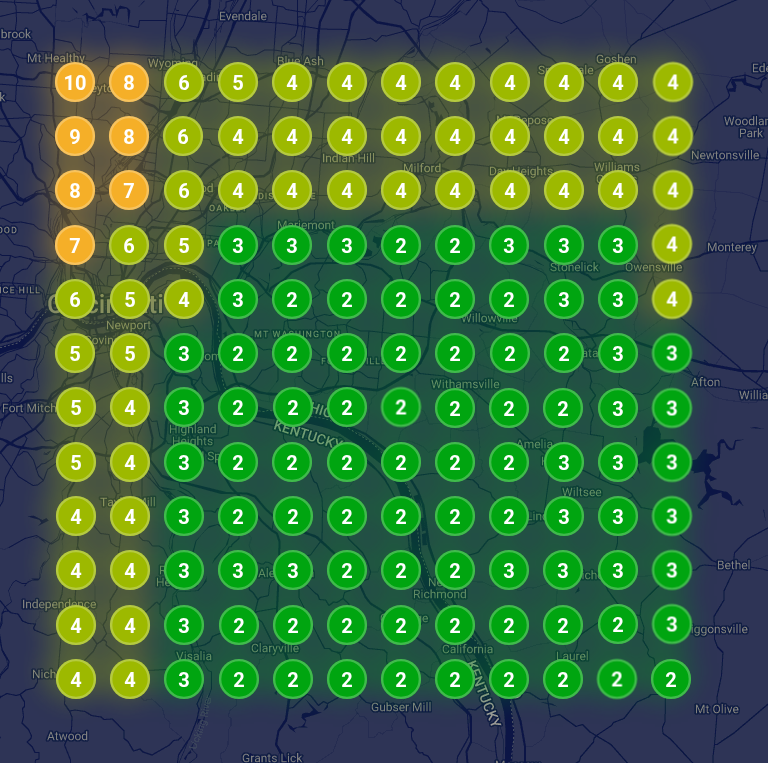
They weren’t starting from zero. They had a decent website and an active GBP. They were doing what most appliance repair companies do, and they still couldn’t crack the top 3.
This post is the exact appliance repair SEO blueprint I used, split into four 30-day phases. You’ll see what worked, what didn’t, and the call volume at every phase. Most case studies skip that part.
Let’s dive in.
The company had a physical location, an active GBP, and the basics done right. What they were missing wasn’t effort. It was strategy.
A 36% visibility score means Google showed their profile in roughly 1 out of 3 relevant searches across their service area. That was the starting point.
Their average position across the geo-grid was 4.4. That sounds close to the top 3. It’s not.
The map pack shows 3 businesses. Position 4 means you’re hidden behind the “More places” tap. Position 4 is where visibility dies.
The geo-grid scan made the problem visible. Across their market, the grid was mostly orange and yellow, with sparse green. [CONFIRM: name the geo-grid tool and match the color ranges to its actual legend (about-me gap 4)]
[SCREENSHOT: Starting geo-grid, mostly orange and yellow with sparse green. Alt text: Starting geo-grid scan showing an appliance repair company ranking outside the top 3 across most of its market.]
The grid told me something important: they weren’t just ranking low. They were ranking unevenly. Position 2 in one neighborhood, position 8 in another.
Google wasn’t confident they were relevant to appliance repair searches.
Here’s what I found when I audited the profile and website:
The GBP had the right basics filled out. But the categories were generic. Primary category: “Appliance repair service.” Secondary categories: none.
The website was worse. One “Services” page listed every appliance they fixed: refrigerators, washers, dryers, ovens, dishwashers, microwaves. One page, no depth, no relevance signals for any single appliance.
So when someone searched “refrigerator repair near me,” Google saw a business that fixes appliances. Not a business that lives and breathes refrigerators. That gap decides who ranks.
They were trying to rank for “appliance repair,” a crowded keyword with mixed intent. They needed to win the urgent, specific searches first: refrigerator repair, washer repair, dryer repair.
Google’s own docs say local results are based mainly on relevance, distance, and prominence (as of July 2026). This profile gave Google weak relevance signals and no reason to rank it above competitors.
Here’s the deal: this is the trap most appliance repair companies fall into. They think bigger is better: more appliances, more keywords, more coverage.
Google rewards the opposite. Pick your lanes and prove them.
The first 30 days were about structure, not promotion. Four jobs: categories, website architecture, profile completeness, and entity cleanup.
I kept “Appliance repair service” as the primary category. Then I added secondary categories for each appliance they wanted to own: refrigerator, washer and dryer, and oven repair.
[CONFIRM: exact category names as they appear in GBP as of July 2026; verify a dedicated oven repair category exists, it may not]
Why categories first? Google states directly that the categories you select affect your local ranking, and its guidance says to pick the most specific category available (as of July 2026). The primary GBP category is also the #1 local pack ranking factor in Whitespark’s 2026 Local Search Ranking Factors survey of 47 local SEO experts.
Generic categories get generic rankings. Specific categories create specific relevance.
The bigger fix was the website. I broke the single Services page into dedicated pages for each major appliance:
Each page had depth. Not “we fix this appliance,” but what breaks, how it gets fixed, which brands, and why call us.
Why does this matter?
The website feeds the map pack. Google crawls the site to understand the business, and on-page signals rank among the top factor groups in Whitespark’s 2026 survey. A detailed refrigerator page tells Google: this business knows refrigerators.
Most appliance repair companies treat GBP and the website as separate channels. They’re not.
While the pages were in progress, I completed every field on the GBP, one by one.
I rewrote the business description to lead with appliance-specific language: “We specialize in refrigerator, washer, dryer, and oven repair for [market]. Same-day service available.” (The description keeps the client’s “we” because it speaks for the company.)
I filled out the Services section with every appliance and job type. This field is tested, not theoretical: Sterling Sky’s testing found that adding Google’s predefined services moved rankings within 24 to 72 hours in their 2022 retest.
I added real photos: technicians on actual jobs, the branded trucks, the building. Hours, payment methods, and every empty field got completed.
The last foundation piece was entity cleanup. NAP is just your business name, address, and phone number.
When your NAP differs across directories, Google has to guess which version is correct. Conflicting data weakens trust in the entity. That’s the consensus read among local SEOs, and it matches what I see in audits.
I audited their listings on Google, Yelp, Apple Maps, the local chamber of commerce, and industry directories. Some listings had the full business name, others a shortened version. Some had the suite number, others didn’t.
I corrected every listing to match the GBP exactly. Exact name, exact address, exact phone number.
This sounds small. It is. But small, consistent signals compound.
By day 30, I had:
The visibility score was still 36%. The average position was still 4.4. Nothing had moved.
That’s normal. Rankings lag strategy. The next 90 days would build on this foundation.
Phase 1 built the structure. Phase 2 filled it with proof of expertise, because Google needs to see depth on specific appliances, not just a claim of “appliance repair.”
I expanded each appliance page to answer the questions customers actually ask when that appliance breaks.
The refrigerator repair page grew sections on:
The content wasn’t thin, and it wasn’t filler. A homeowner could learn something useful. Google could see appliance-level expertise on every page.
I started posting to the GBP once a week. Not “we’re hiring” or “happy holidays” posts. Posts about actual work:
Each post carried a real photo of the actual job.
Do GBP posts move rankings? The best public test says no. Sterling Sky tracked 441 keywords per listing for 9 weeks and found zero direct ranking movement from Google posts.
[CONFIRM: this framing replaces the draft’s “posts are a ranking signal” claim; see QA report]
So why post every week? Because posts convert. A profile with fresh, specific job photos looks alive to the customer comparing 3 repair companies.
My read: posts earned calls here, not rankings.
I replaced every stock photo on the profile with real ones: the branded truck, the building, technicians working on actual appliances.
This isn’t just taste. Google’s media guidelines tell you to upload photos you captured yourself and to avoid stock photos and imagery created by other parties (as of July 2026). Stock photos also tell customers you might not be a real local business.
Real photos say: local, active, doing the work.
I also made sure the company was listed in the directories that matter for this niche, with appliance-specific categories where available.
Yelp. Apple Maps. The local chamber. Appliance repair industry directories.
Every listing carried the same name, address, and phone number, plus the same appliance focus. Each matching citation tells Google the same story: this business is real, stable, and focused on appliance repair.
By day 60, I had:
The visibility score sat around 36-40%. [DATA: confirm the day-60 visibility range from scans] Rankings had barely moved.
This is the phase where most people quit. The work feels invisible. But Google crawls, processes, and re-ranks on its own schedule, not yours.
Relevance tells Google what you do. Prominence tells Google you’re established and trusted while doing it. Phase 3 was about becoming harder to ignore in the local market.
Prominence is how well-known a business is, and it’s one of the three local ranking factors Google names in its own docs, alongside relevance and distance. Google says it draws on signals like how many websites link to the business and how many reviews it has (as of July 2026).
Prominence covers more than links. It’s whether your market, and the web that describes your market, knows you exist.
I looked for real local commitments, not link schemes.
The company sponsored a local youth sports team. Their name and logo went on the jerseys and on the organization’s website. They also joined the local chamber of commerce and started showing up at events.
Is a sponsorship a direct ranking factor? Google has never said that, and I won’t claim it.
My read: community involvement builds exactly the signals Google says feed prominence, links from local sites, brand mentions, and searches for your name.
[CONFIRM: replaced the draft’s “across dozens of local audits” claims with “my read” framing; add an audit-count fact to about-me.md if you want the stronger version]
This is different from citation blasts, which push your data to hundreds of low-trust directories. I don’t recommend them.
I care about consistent entity signals across the sources Google actually trusts.
So I built a short list: local business associations, appliance repair industry directories, and local supplier directories.
Every citation matched the GBP exactly: same name, same address, same phone, same appliance-specific categories.
I seeded the GBP Q&A section with the questions customers actually ask:
Then I answered each one with specific, useful information. Posting and answering your own questions is a normal, allowed use of the feature.
Most competitors leave Q&A empty. Filling it does two jobs: it answers buyers before they call, and it puts your appliance know-how on your profile in Google’s own format.
The weekly posts continued, but I made them place-specific. Each post named the neighborhood where the job happened:
To be clear: this is naming real neighborhoods in the post text, not a technical geo-tagging trick. I can’t prove neighborhood mentions move rankings, and I don’t rely on them alone. They document real work in real places, and that’s content no competitor can fake.
[CONFIRM: reframed from “geo-tagged posts feed proximity ranking”; see QA report]
By day 90, I had:
Around day 75, the geo-grid started to shift. Orange and yellow began turning green, and visibility moved from 36% toward 50%. [DATA: confirm day-75 timing and score from scans]
Relevance plus prominence equals movement. But the real jump came in Phase 4.
Around day 90, everything built over the first three phases started to compound. This phase is why patience matters in local SEO.
The grid positions that had sat at 6-9 moved to 3-5. Some neighborhoods broke into the top 3.
Visibility jumped from around 40% to 50%. Then 55%. By day 120, it hit 60%.
The average position improved from 4.4 to 3.4. That’s a full position closer to the top 3, across the whole market.
No single tactic did this. The appliance pages were indexed and weighted.
The citations backed up the entity. The prominence signals registered.
Google’s algorithm processes these signals over time, not instantly. Once enough of them accumulated, the profile re-ranked higher across the grid.
For 90 days the work felt invisible. Then it all moved at once.
You’re not waiting for nothing. You’re waiting for Google to finish counting.
Calls followed rankings, with a lag:
Across the full 120 days, the total came to 490+ calls directly from the GBP.
[SCREENSHOT: GBP performance insights showing call volume by week or month, with the acceleration in days 91-120. Alt text: Google Business Profile performance report showing tracked calls accelerating between day 91 and day 120.]
The call breakdown told its own story.
Refrigerator repair calls came in highest. That made sense: food spoils, replacement is expensive, and people search the moment it fails. Washer and dryer calls came second, also urgent and high-margin.
Oven repair brought fewer calls but strong margin per job. [DATA: add exact call split by appliance if the records allow]
This is why the multi-appliance strategy worked. Specific rankings attract specific, high-intent calls, not “how much do you charge” tire kickers.
By day 120, the geo-grid was mostly green.
[SCREENSHOT: Geo-grid from July 3, 2026 showing predominantly green positions 1-4 across the market. Alt text: Final geo-grid scan showing an appliance repair company ranking in the top 3 across most of its service area.]
The number that matters: 36% to 60% visibility. That’s a 24-point jump, a 67% relative improvement, in 120 days.
The work didn’t stop. Weekly posts continued, content stayed current, NAP stayed clean, and the partnerships stayed active.
The rankings held. The calls kept coming.
Local SEO isn’t a sprint. It’s a system. You build it, then you maintain it.
Every case study that skips this section is hiding something. Here’s what went wrong and what each mistake taught me.
When I started, the GBP service area spanned a 30-mile radius. The owner wanted to serve everyone.
I narrowed the focus to the 10-mile core where most of their jobs actually happen, and that’s where the strategy went to work. That was a hard conversation. It was also the right call.
Fair warning on the mechanism: Sterling Sky tested this directly and found the service area you set in GBP does not impact ranking. You rank near your verified location no matter how wide you draw the map (as of July 2026).
So the radius setting itself didn’t move rankings. What moved them was focusing every signal, pages, posts, citations, and sponsorships, on the market they could actually win. Trying to rank everywhere is how you rank nowhere.
[CONFIRM: reframed from “narrowing the service area improved the proximity signal”; author to approve]
Initially I left the profile with only “Appliance repair service” as its category.
Too broad. Google treated them as one generic repair company among hundreds.
Then I added a refrigerator secondary category. Rankings for refrigerator searches improved within two weeks. [DATA: confirm the two-week timeframe from rank tracking]
Specificity matters even more than I thought.
The profile launched with stock photos. Generic appliances, generic gloves, generic smiles.
I replaced them with real photos of their truck, their building, and their technicians. Engagement on the profile improved right away: more clicks, more calls. [DATA: confirm the engagement lift from GBP performance data]
Stock photos also run against Google’s media guidelines, which ask for photos you captured yourself. There’s no version of this where stock photos are the right choice.
My first versions of the appliance pages were 300-400 words. I thought that was enough.
It wasn’t. The pages ranked, but poorly, because competitors had 1,000+ word pages with real depth.
I grew each page to 800-1,200 words: more problems, more fixes, more brands, more local detail. Rankings improved. The pages also converted better, because customers actually learned something.
Early on, I posted sporadically. Twice one week, nothing the next two.
I switched to a strict schedule: every Monday, one post. The discipline kept the profile visibly active for customers. It also kept a steady stream of real job photos flowing in.
Does the cadence itself move rankings? Sterling Sky’s testing says posts don’t move rankings directly, so I won’t claim the schedule did. The schedule’s real value: it stopped the profile from going quiet, which is what customers notice.
[CONFIRM: reframed from “Google looks at posting frequency as a signal”; author to approve]
I first requested reviews by email. The conversion rate was terrible: under 2%. [DATA: confirm email conversion rate from records]
Email was too slow and too easy to ignore. I switched to SMS requests sent within 2 hours of job completion, while the customer’s relief was highest.
The SMS conversion rate was roughly 10x higher. [DATA: confirm the SMS multiplier from records] That single change did more for review velocity than anything else I tried.
Focus beats coverage: you can’t fight geography, so win your core market first.
Specificity beats breadth, in categories and in content. Authenticity beats polish, in photos and in posts. And on reviews, timing and channel matter as much as the ask itself.
These aren’t theory. They changed how I run every local SEO project now.
You can run this same playbook on your own business. Here’s the order I’d follow.
Decide where you can actually win, then aim everything at it.
Set your GBP service area honestly, but don’t expect the radius setting to change your rankings. Sterling Sky’s testing shows it doesn’t. You rank near your verified location.
The real move: pick the 5-10 mile core where most of your jobs happen, and concentrate your pages, posts, photos, and citations there. Focus is the ranking strategy. The radius is just a display setting.
Check your categories today. This is the highest-leverage 10 minutes in local SEO.
If your only category is “Appliance repair service,” you’re invisible in the specific searches. Add the most specific secondary categories Google offers for the appliances you want to own. Google’s own guidance says to choose the most specific category available.
One business ranking #1 for refrigerator repair earns more than one ranking #5 for generic appliance repair.
If your website has a single Services page, break it up. Create a dedicated page for each major appliance: refrigerator, washer and dryer, oven, dishwasher.
Aim for 800-1,200 words per page. Include:
Google reads your website to understand your business. Give it something worth reading.
Delete the stock photos from your GBP. Google’s media guidelines ask for photos you captured at your business, and customers can smell stock from a mile away.
Upload your actual truck, your actual location, and your technicians on actual jobs. Add new job photos weekly.
Commit to one post per week about real work:
Include a real photo and name the neighborhood. Expect conversion value, not a rankings jump: the best public test found no direct ranking movement from posts.
Audit your name, address, and phone number on Google, Yelp, Apple Maps, your chamber of commerce, and your industry directories.
Make every listing identical to your GBP, down to the suite number.
Tedious? Yes. Do it anyway. Conflicting entity data forces Google to guess, and you don’t want Google guessing.
Skip the citation blasts. They’re spam, and I don’t recommend them.
Get listed in your local business associations, appliance repair industry directories, and supplier directories, with information that matches your GBP exactly.
If you ask for reviews by email, stop. Send an SMS within 2 hours of finishing the job, while the customer is still relieved, and include your direct Google review link. Google lets you create a review link or QR code for exactly this.
Warning: Ask for the review, but never pay for it or gate it. Google’s review policy prohibits offering incentives for reviews, and violations can get reviews removed or the profile restricted.
Run it in this sequence:
Foundation first, then content, then promotion. The order is the strategy.
Expect nothing visible for 60 days, movement around day 60-90, and the compounding jump near day 120. Calls lag rankings by a few weeks.
And expect it to be ongoing. Weekly posts, fresh content, clean NAP, steady reviews. That’s how you stay ranked after you get there.
Map pack ranking isn’t about doing more. It’s about doing the right things in the right order.
This company had the basics right and still sat at 36% visibility. The fix was strategy: the right categories, one deep page per appliance, real photos, matching citations, and real local prominence. Stacked in that order over 120 days.
My job is not to make your GBP look active. My job is to make the right pages stronger, clearer, and more visible where leads are actually coming from.
The same playbook applies if you’re a plumber, an electrician, or a dentist.
Bottom line? Specificity, consistency, and local prominence. That’s the formula.
To go deeper, read my guides on [INTERNAL LINK: Google Business Profile optimization pillar], [INTERNAL LINK: how to track map pack rankings with a geo-grid], and [INTERNAL LINK: how to get more Google reviews].
Want this run on your business? Book a 20-minute call and you leave with the top 3 issues to fix to improve your leads, whether we end up working together or not. Prefer project-based work?
Bring one URL, yours or a client’s. 30 minutes, at least one fix worth making.
What that saves you: no developer who ignores page speed, no theme bloat that tanks Core Web Vitals, no missing schema you pay to add back, no rebuild when the audit lands.

Written by Jitender Ahlaawat
Local SEO since 2017, across hundreds of campaigns for 20+ marketing agencies. More on the homepage or LinkedIn.
Stuck on the thing this post describes?
Bring the URL to a 30-minute call. No sales script.